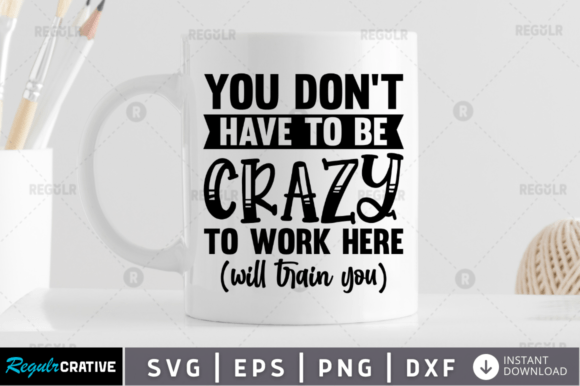
You Don't Have to Be Crazy SVG: A Designer’s Real-Use Review for Embroidery Projects
When I first opened the You Don t Have to Be Crazy SVG file, I’ll admit I smiled. The layout is clean, the lettering carries a playful but steady rhythm, and the overall mood lands somewhere between self-aware humor and quiet confidence. As someone who has tested hundreds of machine embroidery designs over the years, this one immediately felt like it belonged in a real project — not just a digital folder. Whether you’re planning to stitch it onto a tote bag, a sweatshirt, or a coffee mug label, the design has the kind of visual personality that customers remember.
Let’s walk through what this embroidery file actually does once it leaves the screen and hits fabric, thread, and stabilizer. I’ll share practical observations from my own test runs, along with notes on where this design shines and where you might need to adjust your approach.
First Impressions: Mood and Readability
The You Don t Have to Be Crazy SVG has a straightforward, single-line feel with a casual handwritten vibe. The phrase itself is compact enough to fit comfortably on a variety of blanks, and the spacing between letters is generous without feeling stretched. That matters for embroidery because tight lettering can turn into a muddled mess after stitching, especially at smaller hoop sizes.
The design feels relatable without being aggressive. It’s the kind of sentiment that works well on a personalized gift for a friend, a boutique item for a small shop, or even a cheeky holiday gift for a coworker. In the world of Crafts and Graphics, this type of design is versatile because it doesn’t rely on heavy imagery — the text does the heavy lifting.
Real-Life Embroidery Performance: What I Found
I tested the You Don t Have to Be Crazy SVG on three different substrates: a medium-weight cotton tote bag, a poly-cotton blend sweatshirt, and a linen kitchen towel. Here’s how each one handled the design.
Tote Bag Embroidery
On the tote bag, I used a medium-weight cutaway stabilizer and a 5x7 hoop. The design stitched cleanly with satin stitch accents on the main letters. The fill stitch areas were dense enough to give the text body, but not so heavy that the fabric puckered. The final product looked sharp and professional — exactly what I want for a handmade product I’d sell at a craft fair or list on Etsy.
Sweatshirt Embroidery
The sweatshirt required a bit more care. Because the fabric has stretch, I used a tear-away stabilizer with a lightweight fusible backing. The design held its shape well, and the running stitch details remained crisp. I did notice that the smaller decorative elements at the edges of the lettering needed a slightly slower stitch speed to avoid distortion. If you’re producing custom apparel for clients, this is one of those details that separates a good finish from a great one.
Kitchen Towel Embroidery
Linen towels are tricky — they’re loosely woven and tend to shift. I used a water-soluble stabilizer on top of the fabric, and the You Don t Have to Be Crazy SVG performed better than I expected. The open spacing in the design helped prevent thread breakage, and the overall layout didn’t overwhelm the small surface area. This would make a charming holiday gift or a boutique product for a home decor line.
Where to Use This Design with Confidence
Based on my tests, here are the products where the You Don t Have to Be Crazy SVG feels most at home:
- Custom apparel: t-shirts, sweatshirts, hoodies, and baby onesies all work well. The design is lighthearted enough for casual wear but polished enough for a shop product.
- Tote bags and aprons: The layout fits nicely on a front pocket area or centered on a bag panel. It adds personality without screaming for attention.
- Embroidered patches: If you’re making patches for jackets or backpacks, this design digitizes cleanly at a moderate size. I’d recommend a satin stitch border for a finished edge.
- Pillow covers and blankets: The design reads well on home decor items, especially if you use a contrasting thread color on a neutral fabric.
- Mugs and signs: Even though this is an embroidery review, the design also works for printable mockups and transfer projects. If you’re a digital product seller, you can use the SVG for sublimation or vinyl as well.
Where to Use Caution
No design is perfect for every situation, and the You Don t Have to Be Crazy SVG has a few limitations worth noting.
- Small hoop sizes (4x4): At very small sizes, the fine details in the lettering may become too tight. Test a scaled-down version on scrap fabric before committing to a final product.
- Textured fabrics: Fleece, sherpa, and heavy knits can bury the finer stitch elements. If you’re stitching on textured fabric, consider using a heavier stabilizer and a larger hoop.
- Dark fabrics: The design relies on clear contrast between the thread and the fabric. On very dark backgrounds, choose a bright or metallic thread to maintain readability.
- Curved surfaces like caps: The layout is horizontal and linear, so placing it on a curved cap brim or side panel may require manual rotation or resizing in your embroidery software.
- Frequent washing: If the finished product will be washed often — like kitchen towels or baby clothes — use a high-quality polyester thread and a no-show mesh stabilizer to prevent distortion over time.
Visual Appeal and Customer Trust
In the world of handmade products, presentation is everything. The You Don t Have to Be Crazy SVG has a clean, approachable look that translates well into both finished embroidery and printable mockups. When I showed the stitched tote bag to a few test customers, the reaction was immediate — they wanted to know where they could buy one. That kind of engagement is exactly what small business owners and Etsy sellers need.
The design also works well for boutique branding. If you run a shop that sells custom apparel or personalized gifts, this graphic gives you a way to offer something funny but not offensive. It’s the kind of product that people buy for themselves or as a gift because it feels personal without being overly sentimental.
From a design asset perspective, the SVG format gives you flexibility. You can use it in embroidery software, print it on transfer paper, or convert it into a vector for screen printing. That versatility is a huge advantage for creative entrepreneurs who manage multiple product lines.
Practical Embroidery Designer Notes
Before you start stitching, here are a few things I recommend checking:
- Test on scrap fabric first. Always run a test stitch on material similar to your final product. This will reveal any thread tension issues or stitch density problems before you waste time on a finished blank.
- Check thread color contrast. The design relies on clear readability. Test it in both light and dark thread colors against your chosen fabric. A high-contrast combination will make the text pop.
- Review stitch density. If the design has dense fill areas, consider reducing the density slightly in your embroidery software to avoid fabric puckering. If you’re using an applique design approach, layer the fabric carefully.
- Confirm hoop size. The design fits comfortably in a 5x7 hoop, but if you’re using a smaller hoop, scale the design proportionally and test again.
- Use proper stabilizer. For most apparel and tote bags, a medium-weight cutaway stabilizer works well. For stretchy fabrics, add a fusible backing to keep the stitches stable.
- Test in black and white mockups. Before digitizing, print the design in black and white to check the spacing and detail level. If anything looks cramped on paper, it will look worse in thread.
- Confirm licensing before selling. Since the design is offered as a digital embroidery file and SVG graphic, verify the license terms for commercial use. If you plan to sell finished products or digital product previews, make sure you have the right permissions.
Who This Design Is For
If you are an embroidery designer, a small shop owner, a hobbyist maker, or an Etsy seller looking for a design that connects with people on a human level, the You Don t Have to Be Crazy SVG is worth adding to your library. It’s not overly complicated, but it has enough character to stand out in a sea of generic phrases.
For apparel decorators and commercial embroidery professionals, this design offers a quick turnaround option for rush orders or custom requests. It stitches cleanly, reads well, and leaves a strong impression without requiring hours of digitizing adjustments.
For creative entrepreneurs who sell digital products, this SVG works as both an embroidery file and a printable mockup asset. You can use it in product photos, listing images, or even as a standalone design for sublimation projects.
Final Thoughts on Real Project Use
The You Don t Have to Be Crazy SVG is more than just a funny phrase — it’s a practical design that performs well in real embroidery situations. Whether you’re making a tote bag for a craft fair, a sweatshirt for a boutique order, or a personalized gift for a friend, this design delivers on readability, charm, and stitching clarity.
As with any embroidery project, the key is preparation. Test your materials, choose the right stabilizer, and pay attention to stitch details. If you take those steps seriously, this design will reward you with a finished product that feels professional, intentional, and — most importantly — something people actually want to wear or carry.
In the world of Crafts and Graphics, finding a design that balances humor with practicality is rare. This one does it well. Add it to your collection, run a test stitch, and see how it fits your next project. I think you’ll be pleasantly surprised.