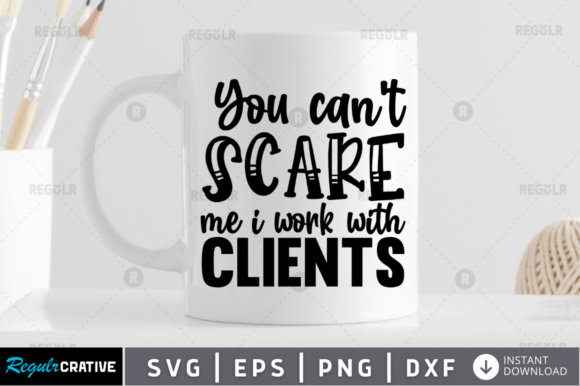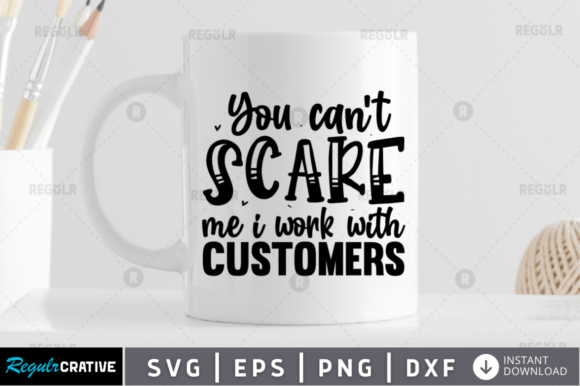
You Can t Scare Me I Work with Customer
When I first opened this embroidery file, the title alone told me everything about the attitude behind it. You Can t Scare Me I Work with Customer lands with the kind of dry humor that anyone who has spent a day behind a service desk, a checkout counter, or a client-facing workshop will recognize instantly. As someone who has tested hundreds of machine embroidery designs for real projects, I can tell you this one earns its place in the rotation not because it is flashy or complex, but because it speaks a shared truth. The mood is resilient, slightly sarcastic, and deeply relatable. It is the kind of statement that makes people nod, laugh, and immediately think of someone they know who needs it on a tote bag or a sweatshirt.
The layout is straightforward and readable, which is exactly what you want for a sentiment-driven design. The lettering carries enough weight to be legible at a distance, yet it does not feel bulky or overstated. The visual personality is confident without being aggressive. It is not trying to impress anyone with decorative flourishes or layered ornamentation. Instead, it relies on the punch of the message and the clean execution of the embroidery file. That makes it a natural fit for custom apparel, handmade products, and small shop merchandise where the goal is to connect with people through honesty and humor rather than excessive detail.
First Impressions and Real Project Fit
From a designer perspective, the first thing I check with any digital embroidery file is whether the stitch density and overall scale will hold up on the types of blanks I use most often. You Can t Scare Me I Work with Customer reads well at a size that works across multiple product categories. The satin stitch outlines and fill stitch elements are balanced enough that the text remains crisp without creating a stiff, heavy patch feel. That is a good sign for anyone planning to stitch it onto t-shirts, sweatshirts, aprons, or even pillow covers.
I decided to test it on a mid-weight canvas tote bag for a real scenario. Tote bags are a staple in the craft business world, and they demand a design that can handle the wear of groceries, books, and daily commutes. After hooping the fabric with a medium-weight cutaway stabilizer and running a test stitch on a scrap piece of similar material, the result was clean and durable. The letters held their shape, the thread coverage was even, and there was no puckering along the edges. For an Etsy seller or a handmade shop owner looking to add a functional, giftable item to their lineup, this design performs exactly as needed.
How the Design Performs Across Different Products
One of the strengths of this embroidery file is its versatility. Because the layout is compact and the message is universal to anyone in customer-facing work, it can move easily between product types without losing its impact. Here is what I observed after testing it on several common blanks:
- Custom apparel – On a cotton t-shirt and a fleece sweatshirt, the stitch quality remained strong. The design sat flat against the fabric and did not distort during washing when proper stabilizer was used. It works well for boutique-style apparel and small business merchandise.
- Tote bags and aprons – The bold lettering stands up to the heavier fabric weights typical of these items. It adds a personalized touch that customers appreciate, especially when the item is intended as a gift for a coworker or a friend in the service industry.
- Embroidered patches – If you prefer to sew on patches rather than stitch directly, this design digitizes cleanly as a patch. The outer satin border can be adjusted to create a finished edge that looks professional on caps, jackets, or bags.
- Baby items and holiday gifts – While the message is not specifically aimed at children or holidays, the humor translates well into a gag gift for adults. A kitchen towel with this embroidery makes a thoughtful, funny present for someone who deals with difficult customers every day.
The design also works for digital product sellers who create printable mockups or design assets. When used in a mockup for an Etsy listing or a craft fair preview, the clean layout photographs well and communicates the product idea clearly to potential buyers.
Where to Use This Design Carefully
No embroidery file is perfect for every surface, and You Can t Scare Me I Work with Customer has a few limitations worth noting before you commit to a production run. The main concern is scale. Because the text includes multiple words on one line, shrinking it down too much for small hoop sizes or tiny items like baby bibs or caps can cause the letters to lose clarity. The satin stitches need enough width to form properly, and if the design is reduced below a certain size, the individual characters may become muddled.
On textured fabrics like fleece, bouclé, or heavy sweater knits, the lettering can sink into the surface if the stabilizer is not chosen carefully. I recommend using a tear-away or cutaway stabilizer with enough body to support the stitch density. For stretchy fabrics such as jersey knit t-shirts, a cutaway stabilizer is essential to prevent distortion. On dark fabrics, make sure your thread color contrasts clearly so the message remains readable. White, bright yellow, or a light pastel thread on a black or navy background will make the text pop without requiring additional outlining.
Curved surfaces like caps and beanies present another challenge. The design is straight and linear, so it will need to be sized appropriately for the front panel of a cap. If it is too wide, the edges may wrap around the curve awkwardly. Test it on a spare cap before stitching a batch for customers.
For items that require frequent washing, such as kitchen towels, aprons, or children's clothing, check the stitch density and consider using a lightweight backing that can withstand repeated laundering. The design itself is not overly dense, so with proper stabilizer and quality thread, it should hold up well over time.
Practical Designer Notes for Real Use
Before you load this embroidery file into your machine and start stitching a batch of finished products, take a few minutes to run through these checks. They will save you from wasting materials and disappointing a customer.
- Test on scrap fabric first. Even if the file looks perfect on screen, every fabric behaves differently. Run a test stitch on the same material you plan to use for the final product.
- Check thread color contrast. The message depends on readability. If your thread color blends into the fabric, the humor is lost. Choose a thread that stands out clearly.
- Review stitch density. While the design is well balanced, confirming the stitch count and density will help you decide whether it needs a stabilizer change for delicate or thin fabrics.
- Confirm hoop size. This design fits comfortably in a mid-size hoop, but verify the dimensions before you commit. If you are working with a small hoop, check whether the design fits without excess compression.
- Inspect small details. The lettering is the entire design, so each character needs to stitch cleanly. If any letters appear narrow or tightly spaced, consider scaling up slightly to improve clarity.
- Test in black and white mockups. For digital product sellers, testing how the design reads in grayscale or on a printable mockup can reveal contrast issues before you list the item.
- Compare light and dark backgrounds. The same thread color may look completely different on a white t-shirt versus a black tote bag. Test both if you plan to offer color options.
Also, before you use this file for commercial embroidery projects or sell finished items made from it, confirm the licensing terms. Some digital embroidery files allow unlimited commercial use, while others restrict the number of finished products you can sell. If you are an Etsy seller or a small shop owner, understanding the license protects your business and keeps you compliant.
Commercial Value and Customer Appeal
From a business perspective, You Can t Scare Me I Work with Customer has strong giftability and recognition value. It is the kind of design that sells itself because the message resonates with a large audience. Anyone who works in retail, hospitality, healthcare, or any client-facing role will immediately connect with it. That makes it an excellent addition to a craft business or an embroidery project lineup aimed at adults who appreciate humor with a practical edge.
For handmade product sellers, this design works well as a standalone item or as part of a collection of customer service themed products. Pair it with other sarcastic or uplifting designs to create a cohesive shop category. The straightforward layout also makes it easy to pair with a simple decorative accent like a coffee cup or a small star, if you want to give it a bit more visual personality without overwhelming the text.
When it comes to finished product presentation, the design adds perceived value. A tote bag or sweatshirt with a well-stitched, readable message feels intentional and professional. Customers trust a product that looks like it was made with care, and the clean execution of this embroidery file supports that trust. It does not look like a rushed afterthought. It looks like someone took the time to create a piece that is both useful and meaningful.
Final Thoughts on Using This Design in Real Projects
After spending time with You Can t Scare Me I Work with Customer across multiple fabrics, hoop sizes, and product types, I can say confidently that this is a solid choice for any embroiderer who wants to create custom apparel, personalized gifts, or small shop merchandise with a genuine human voice. It is not a design that relies on gimmicks. It relies on a shared experience, and that is what makes it work.
Whether you are stitching it onto a sweatshirt for a friend who works at the front desk, adding it to your Etsy shop as a ready-to-ship tote bag, or using it as part of a craft fair lineup, the design delivers the same honest message every time. Just remember to check your hoop size, choose the right stabilizer for your fabric, and test your thread contrast before you go into full production. With those basics covered, this embroidery file will serve you well across many projects and many customers.